

The Rules, the Numbers, and the Use Cases
Everything an advisor or issuer needs to understand a Section 351 exchange: the statute, the diversification tests, platform activity to date, and when it makes sense to use one.
What Is a Section 351 Exchange?
Section 351 of the Internal Revenue Code allows an investor to contribute securities to a newly formed ETF and receive fund shares in return. When the requirements are met, the contribution seeks to be treated as a tax-deferred exchange rather than a sale: no gain is recognized at the time of the transfer, and the investor’s cost basis and holding period carry over into the ETF shares.
tax-deferred basis
Three Requirements Every 351 Exchange Contribution Must Satisfy
The 25/50 diversification test
No single contributed position may exceed 25% of the portfolio's value, and the five largest positions together may not exceed 50%.
Contributed securities must be intraday liquid
Eligible holdings trade intraday on an exchange: listed equities, ETFs, closed-end funds, and ADRs. Illiquid or restricted positions do not qualify.
The strategy must align
The contributed basket must be consistent with the investment objective of the receiving ETF as described in its prospectus.
ExchangiFi's optimization software tests all of this before a portfolio is submitted: diversification limits, eligibility of each holding, and alignment with the receiving fund. For the full list of rules and requirements, go to 351 Exchange.
Full rules and requirementsAsset Eligibility for a Section 351 Exchange
What CAN be contributed
-
US Equities and ADRsProvided they are liquid and non-OTC
-
US and Foreign Stock ETFsSubject to the look-through rule
-
Foreign Equities and GDRsOnly if the local market allows in-kind transfers
-
Fixed Income ETFsIf aligned with the broader fund strategy
-
Closed-End FundsIf publicly traded and redeemable in-kind
-
Crypto ETFs, ETPs & DATs, Commodity ETFs, MLPsSmall portion only, often cost-prohibitive operationally
What CANNOT be contributed
-
Mutual FundsIndividual shares cannot be traded in-kind
-
Direct Spot CryptocurrencyUnless structured as a standalone Grantor Trust
-
Restricted and Private SecuritiesPrivate stock, RSUs, and private equity
-
Illiquid and Alternative AssetsHedge funds, REITs, options, and other illiquid positions
-
Restricted Foreign MarketsBrazil, China, India, South Korea, Saudi Arabia, Taiwan
-
CashCash cannot count to diversification requirement tests
A Section 351 ETF Exchange Rests on Three Provisions
Non recognition of gain
A contribution of property to a corporation is treated as a capital contribution rather than a sale. The tax liability is deferred, not eliminated.
The ETF Rule
Authorizes custom baskets, giving the receiving fund standing regulatory authority to accept contributed securities in kind.
In kind redemptions
Allows in kind distributions to satisfy redemptions without triggering fund level capital gains.
When Advisors Reach for a Section 351 Exchange
Concentrated single stock position
A client holds one appreciated name they cannot sell without a large tax bill. The position is contributed into a diversified fund and the gain stays deferred.
Low basis legacy portfolio
Decades of holdings with embedded gains, inherited or self-managed, restructured into a single fund rather than liquidated position by position.
Held away and multi custodian accounts
Positions scattered across brokerages and other advisory firms consolidated into one ETF holding, bringing assets under one relationship.
SMA and model book conversion
An advisor converts a separately managed sleeve into an ETF wrapper, cutting per account trading and simplifying reporting across the book.
Estate and generational planning
Fragmented family holdings unified into one fund so beneficiaries inherit a single diversified position with carryover basis.
One Platform, Three Capabilities
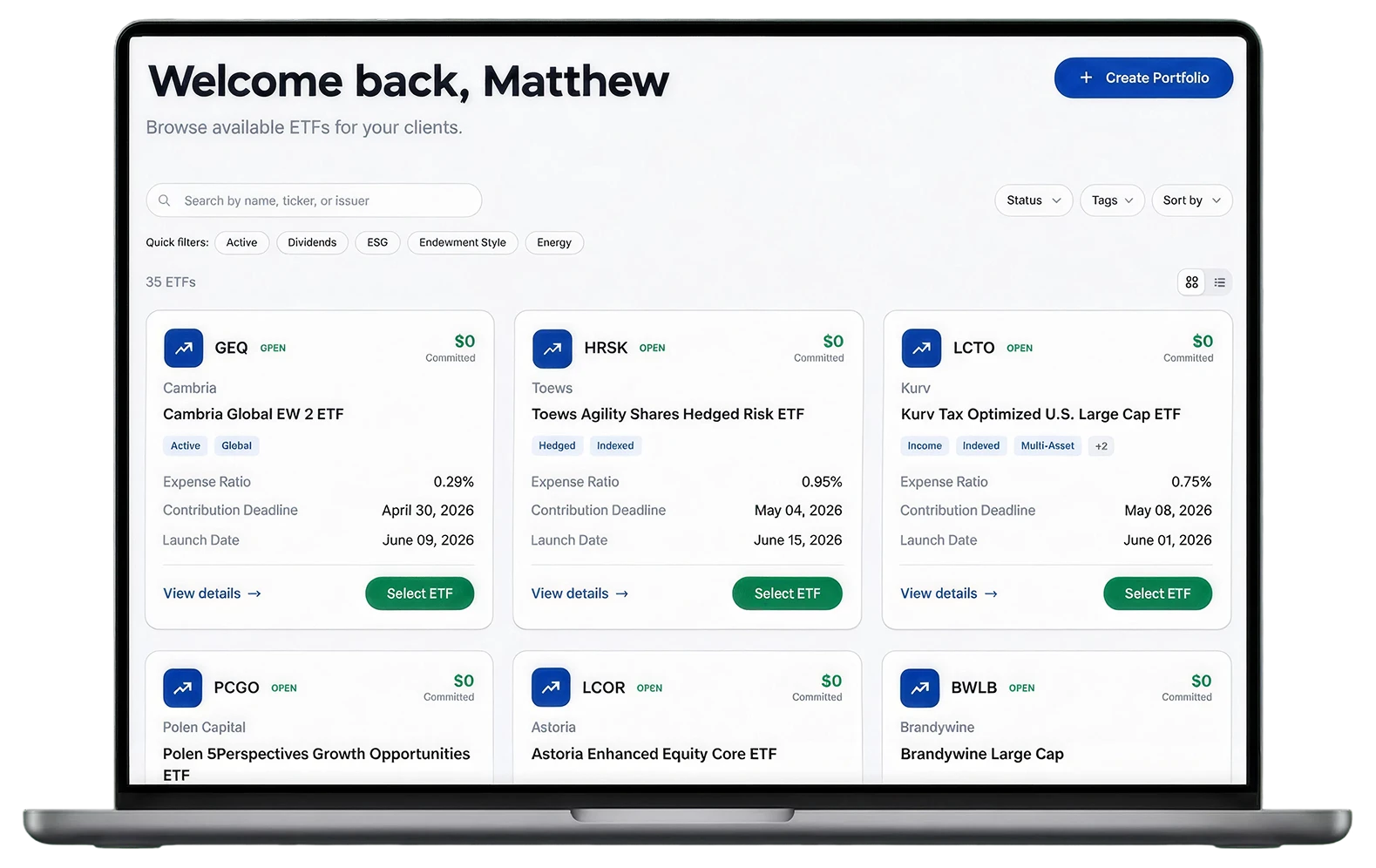
Use the dashboard to find and evaluate Section 351 exchange ETF opportunities
Every open fund in one marketplace, with issuer, strategy tags, expense ratio, contribution deadline, and launch date on each listing.
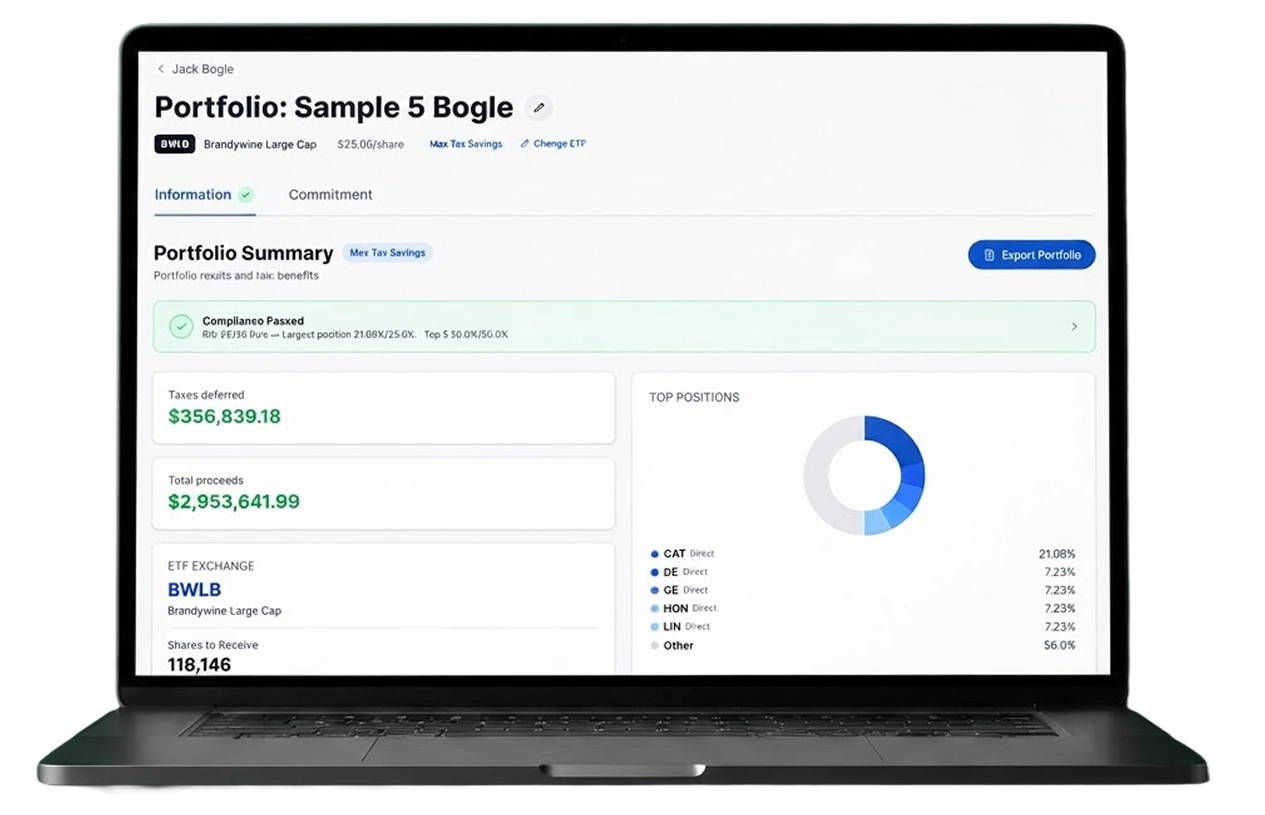
Use the optimization software to check portfolios at the account level and in aggregate
The software runs the 25/50 diversification test and screens each holding for intraday liquidity, one client account at a time and across every contribution in a syndicated launch, then reports the positions to adjust before submission.
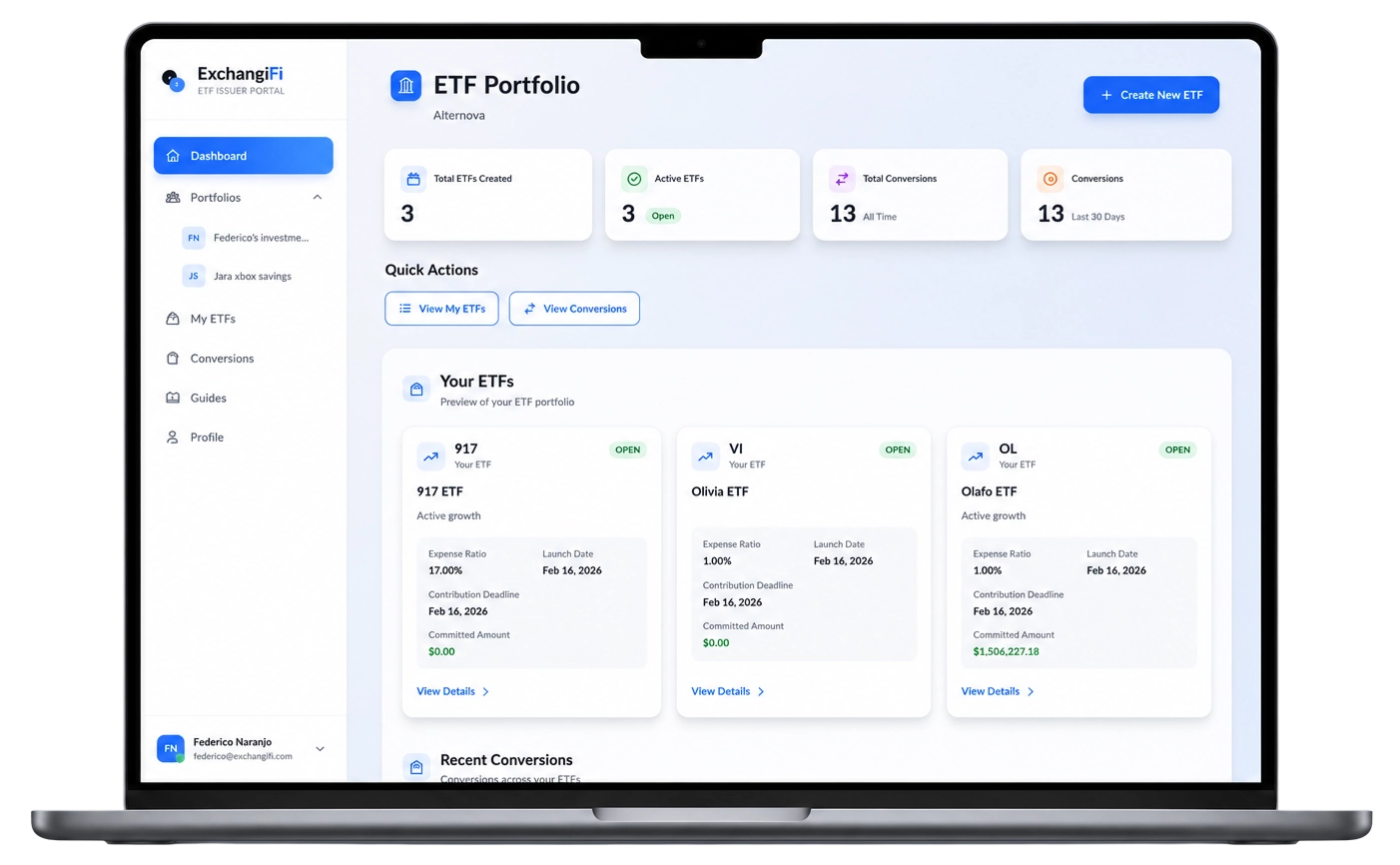
Manage the fund launch end to end
Advisors and issuers work from the same record: committed amounts, contribution deadlines, documents, and conversion status through to launch.
The Service Providers That Make a Section 351 ETF Possible














Register to Access the 351 Exchange Marketplace
Advisors and ETF issuers can register for platform access. If you have questions about Section 351 exchanges or eligibility, contact us.
Join the 351 Exchange Community
Advisors, ETF issuers, service providers, and counsel comparing notes on eligibility, upcoming launches, regulatory developments, and tax aware strategy.