

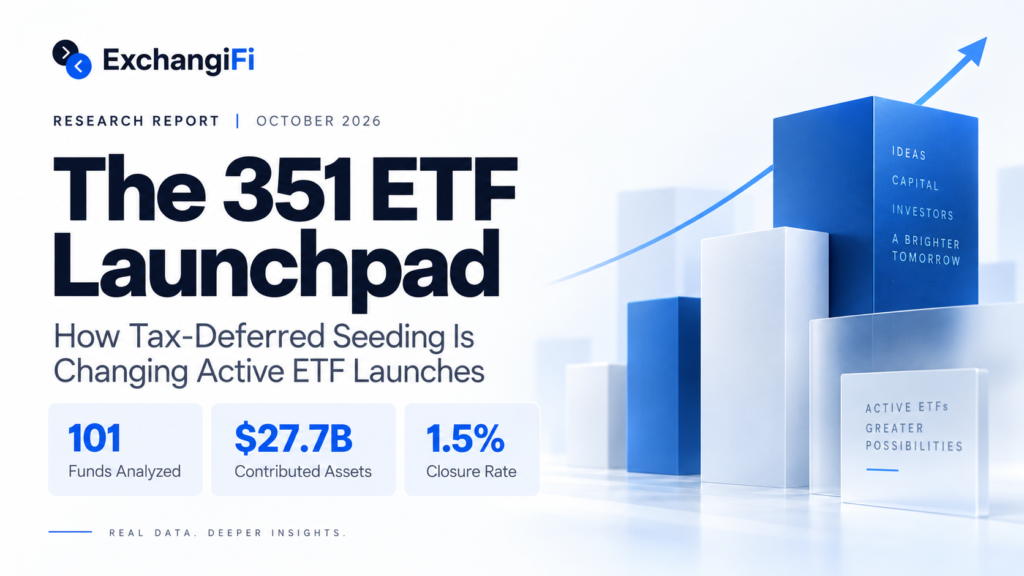
Section 351 of the Internal Revenue Code—which lets investors contribute appreciated securities into a newly formed ETF on a tax-deferred basis—has seeded at least 134 live ETFs with roughly $27.7 billion of contributed assets. But what happens after a 351 ETF goes live?
Critics have sometimes speculated that these funds serve only as custom tax shelters, destined to sit idle as parking lots for their original assets. We decided to test that narrative against the data. ExchangiFi built a fund-level database of 101 Section 351 exchange ETFs to measure how these funds actually perform, survive, and grow.
Our findings show that a Section 351 exchange doesn’t just offer a tax-efficient transition—it creates a viable, competitive ETF from day one. Here are the main takeaways for fund managers:
1. 351 ETFs Perform Like Any Other Active ETF Do 351 ETFs conceal bad strategies? The data says no. Of the 101 funds studied, 67% lagged their benchmark since listing. While this may sound high, it is in line with the broader active management industry, where SPIVA scorecards consistently show 65% to 79% of active large-cap funds underperforming in recent years. The 351 structure does not select for alpha, but it doesn’t select against it either. They perform much like standard active funds.
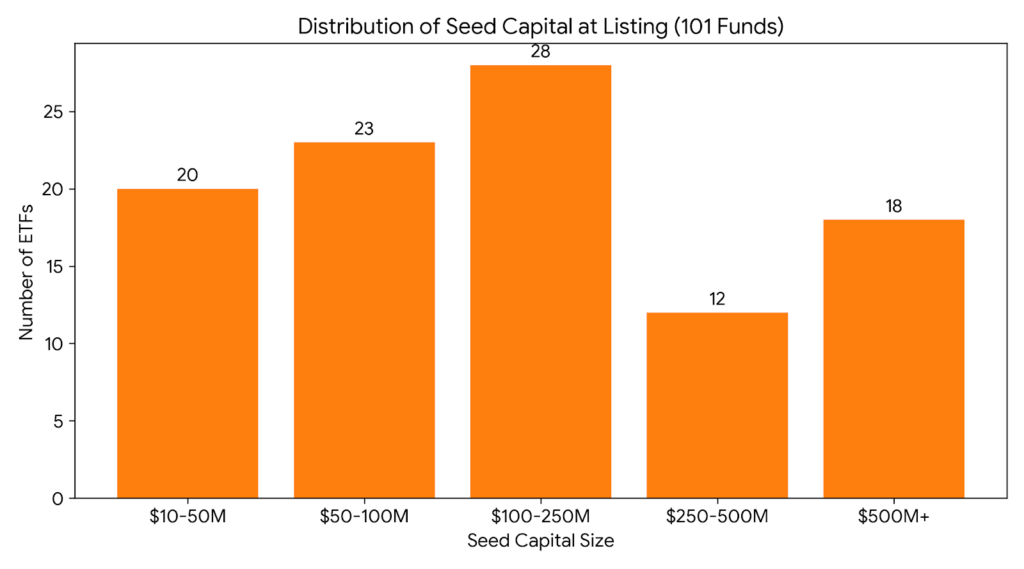
2. Day-One Scale Exceeds $100M The defining feature of a 351 ETF is its size at listing. The median seed capital across our cohort is an impressive $118 million, with an average of $255 million. For context, a typical independent ETF launches with just $2 million to $5 million. A Section 351 launch allows managers to immediately clear the $50M-$100M asset hurdles often required by major wealth platforms.
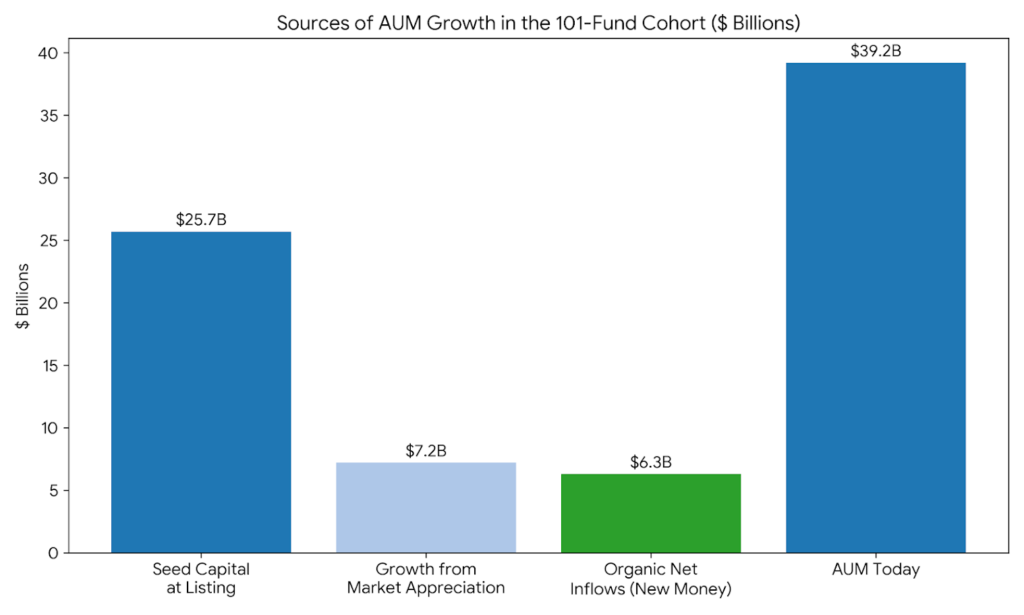
3. Investors Are Buying 351 ETFs After Launch These funds do not just sit there growing solely with the market. Our data shows that 70% of 351 ETFs are gathering organic net inflows (new money). In fact, of the $13.5 billion in total AUM growth across the cohort, $6.3 billion (47%) came from new money rather than market appreciation. One in five 351 ETFs has gathered more than $100 million in organic inflows alone.
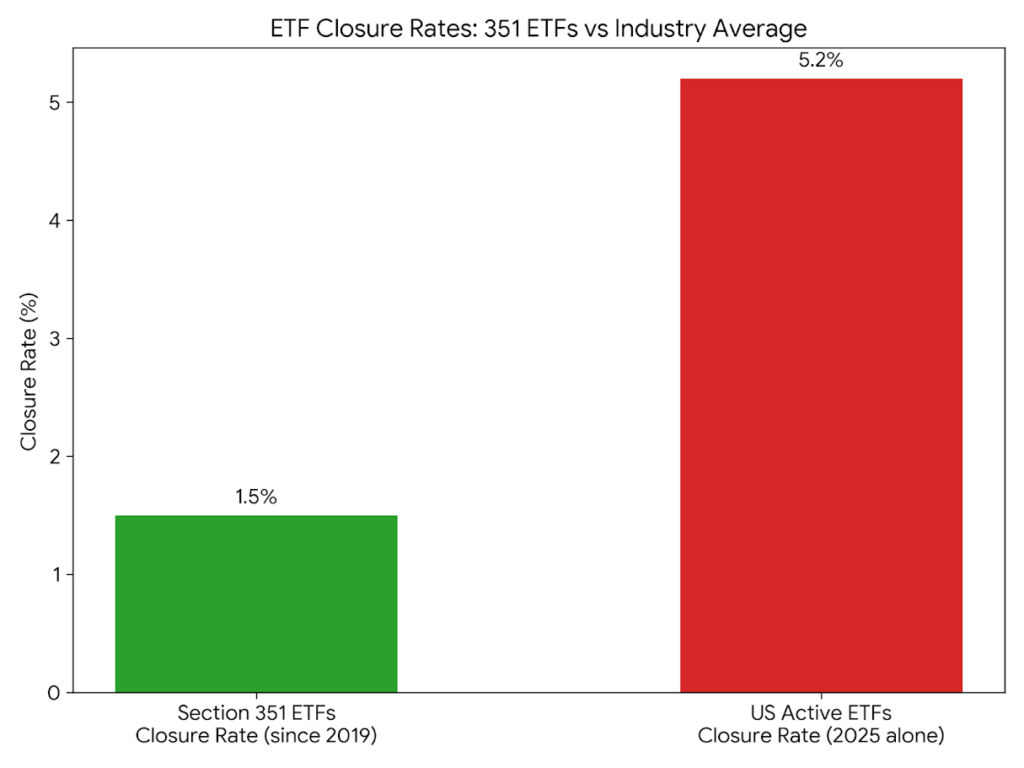
4. Dramatically Lower Closure Rates Because 351 ETFs launch with scale, they bypass the high mortality rate that plagues new ETFs. Since 2019, only two of the 136 Section 351 ETFs ever launched have closed or merged—a cumulative closure rate of just 1.5%. Compare that to the conventional active ETF space, which saw roughly 5% of its entire universe (146 funds) close in 2025 alone. The sticky initial seed gives sponsors the runway they need to market and distribute the fund without the immediate threat of liquidation.
The Bottom Line A Section 351 exchange doesn’t make a strategy better, but it does make a fund business viable on day one. By converting existing SMA assets into a tax-efficient ETF, managers can launch with scale, survive the critical early years, and successfully attract new outside capital.
Download the full research report to see the data behind the findings.