

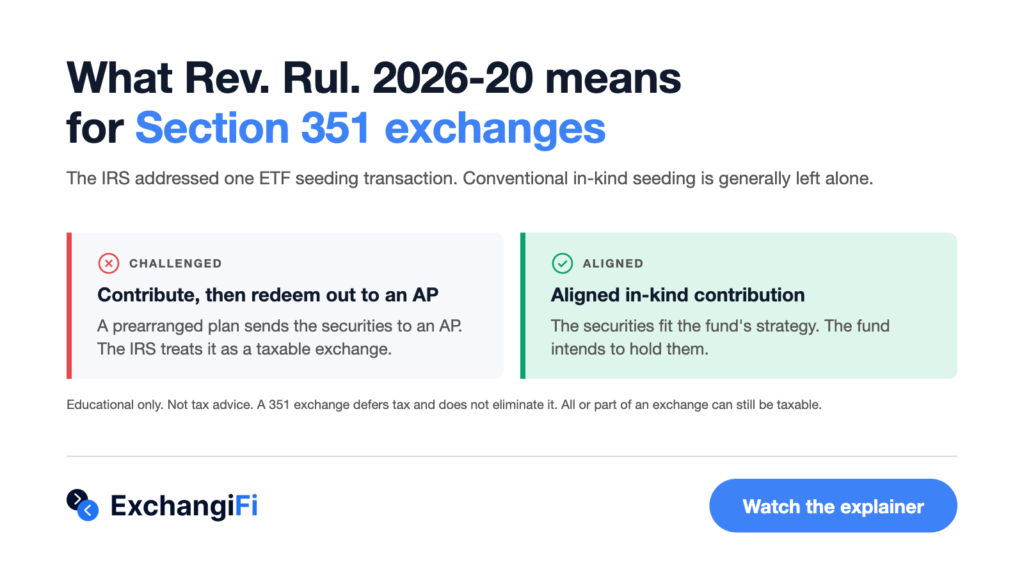
Revenue Ruling 2026-20 and Section 351 ETF Conversions Explained
On September 28, 2026, Treasury and the IRS issued Revenue Ruling 2026-20 and Notice 2026-62. This short video explains what the guidance covers and what it means for Section 351 ETF conversions.
What Is a Section 351 ETF Conversion?
An investor contributes appreciated securities to a new ETF in exchange for ETF shares. If the requirements of Section 351 are met, the investor does not recognize gain at the time of the exchange. The contributed portfolio must already be diversified, and contributors as a group must own at least 80% of the fund right after the exchange. Taxes are deferred, not eliminated.
What Revenue Ruling 2026-20 Addresses
The ruling covers a specific multi-step transaction.
- An investor contributes appreciated securities to a newly formed ETF.
- As part of the same plan, the ETF issues shares to an Authorized Participant (AP).
- Shortly after, the ETF redeems the AP’s shares using the investor’s contributed securities.
The IRS applies the step-transaction and substance-over-form doctrines. It treats the ETF as a conduit. It treats the investor and the AP as having made a taxable exchange of the redeemed securities.
Who Bears the Tax
The investor, not the ETF. Gain on the redeemed securities may be recognized in the year of the exchange. Treasury Notice 2026-62 describes this and similar transactions as potentially abusive. The IRS may later identify them as listed transactions or transactions of interest. Those carry Form 8886 disclosure requirements and penalties for failing to disclose. The ruling interprets existing law and could apply to past transactions.
What Remains Available
The guidance generally leaves conventional ETF creation and redemption alone. A Section 351 conversion is more likely to hold up when the following are true.
- The contributed securities fit the ETF’s stated investment strategy.
- The fund intends to hold the assets.
- There is no prearranged plan to redeem the securities out to an AP.
- The investor has a genuine investment purpose and works with qualified tax counsel.
Frequently Asked Questions
What is Revenue Ruling 2026-20?
It is IRS guidance issued September 28, 2026. It concludes that seeding an ETF with appreciated securities and then redeeming those securities out to an AP as part of the same plan does not qualify for tax deferral under Section 351 for the redeemed securities.
Does Revenue Ruling 2026-20 end Section 351 ETF conversions?
No. It addresses one specific transaction. Conventional Section 351 ETF seeding remains available when the requirements are met.
Who is liable under Revenue Ruling 2026-20?
The investor who contributed the securities. The investor may need to recognize gain on the redeemed securities in the year of the exchange.
What is Notice 2026-62?
It was issued alongside the ruling. It describes the ruling’s transaction and other fund strategies the IRS views as potentially abusive, and it signals possible future guidance.
Read my Financial Planning article on Rev. Rul. 2026-20 | Book a time with ExchangiFi
This content is for educational purposes only. ExchangiFi LLC is a software and technology provider. It is not a registered investment adviser or broker-dealer and does not provide tax, legal or investment advice. Consult qualified tax counsel before any transfer.